Send cold paid traffic to a dedicated landing page; keep the product page for people who already want the product. That is the short answer, and most brands running Meta or TikTok ads today still do the opposite: ad, click, product page, and a conversion rate that quietly caps how far the account can scale.
 Meta ads
 TikTok ads
The reason is not that product pages are badly built. It is that they are built for the wrong visitor.
What a product page assumes
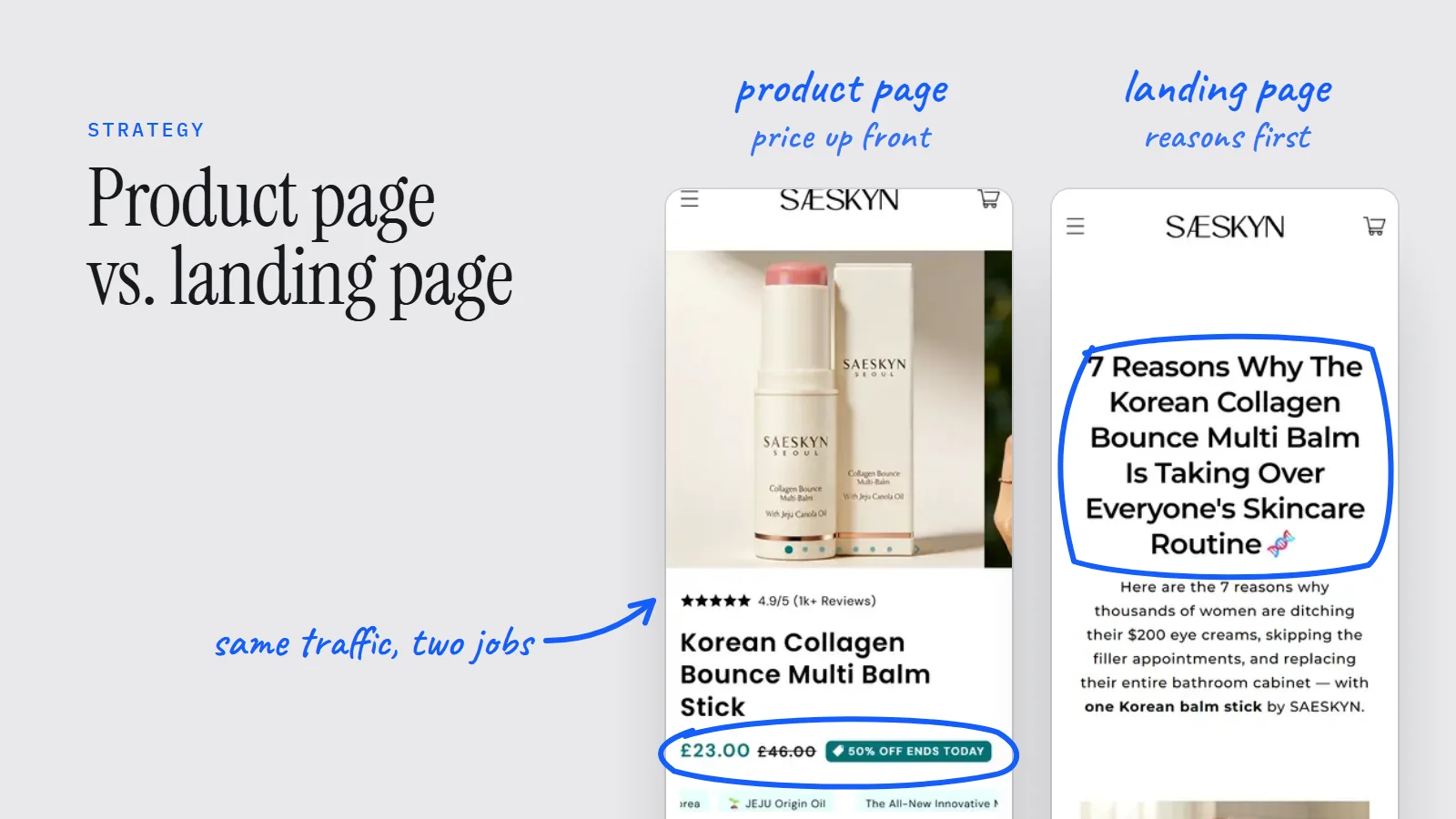
A product page assumes intent. Its whole layout, gallery, price, variant picker, buy button above the fold, answers exactly one question: “I want this, how do I get it?” That is the right page for someone who searched for you, came from a retargeting ad, or clicked a link a friend sent.
A cold click from a social feed carries none of that intent. The visitor was interrupted, got curious, and gave you a few seconds. They do not yet believe they have the problem your product solves, do not know why the obvious alternatives fall short, and have no reason to trust you over the four lookalike brands in their feed. A product page answers “how do I buy” for a visitor who is still asking “why should I care”. The mismatch is structural, and no amount of theme polish fixes a structural mismatch.
What the page in between does
The fix is a page between the ad and the shop whose only job is to close that gap:
- Build the problem.
- Explain the mechanism.
- Handle the objections.
- Hand the shop a visitor who has already decided.
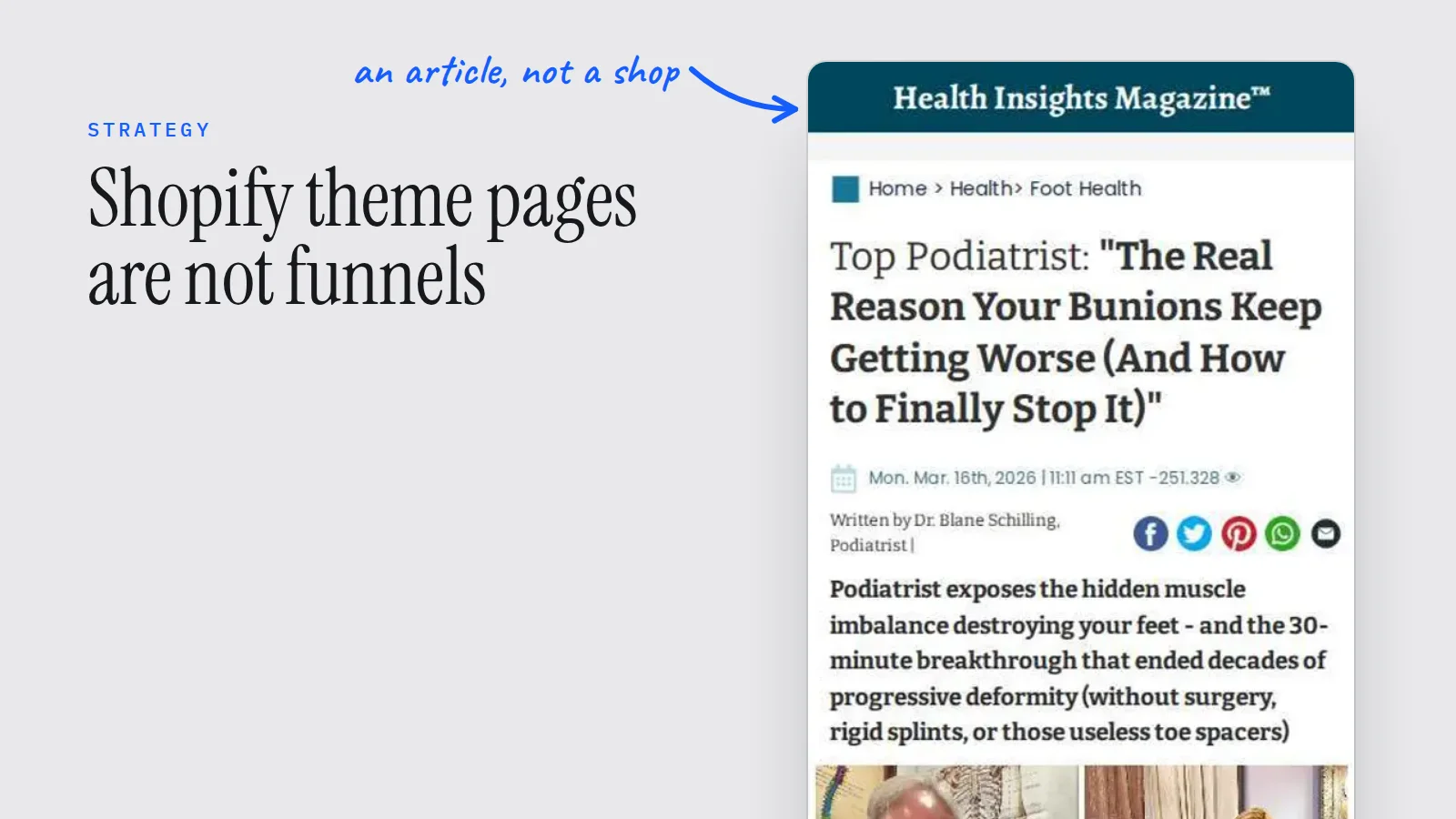
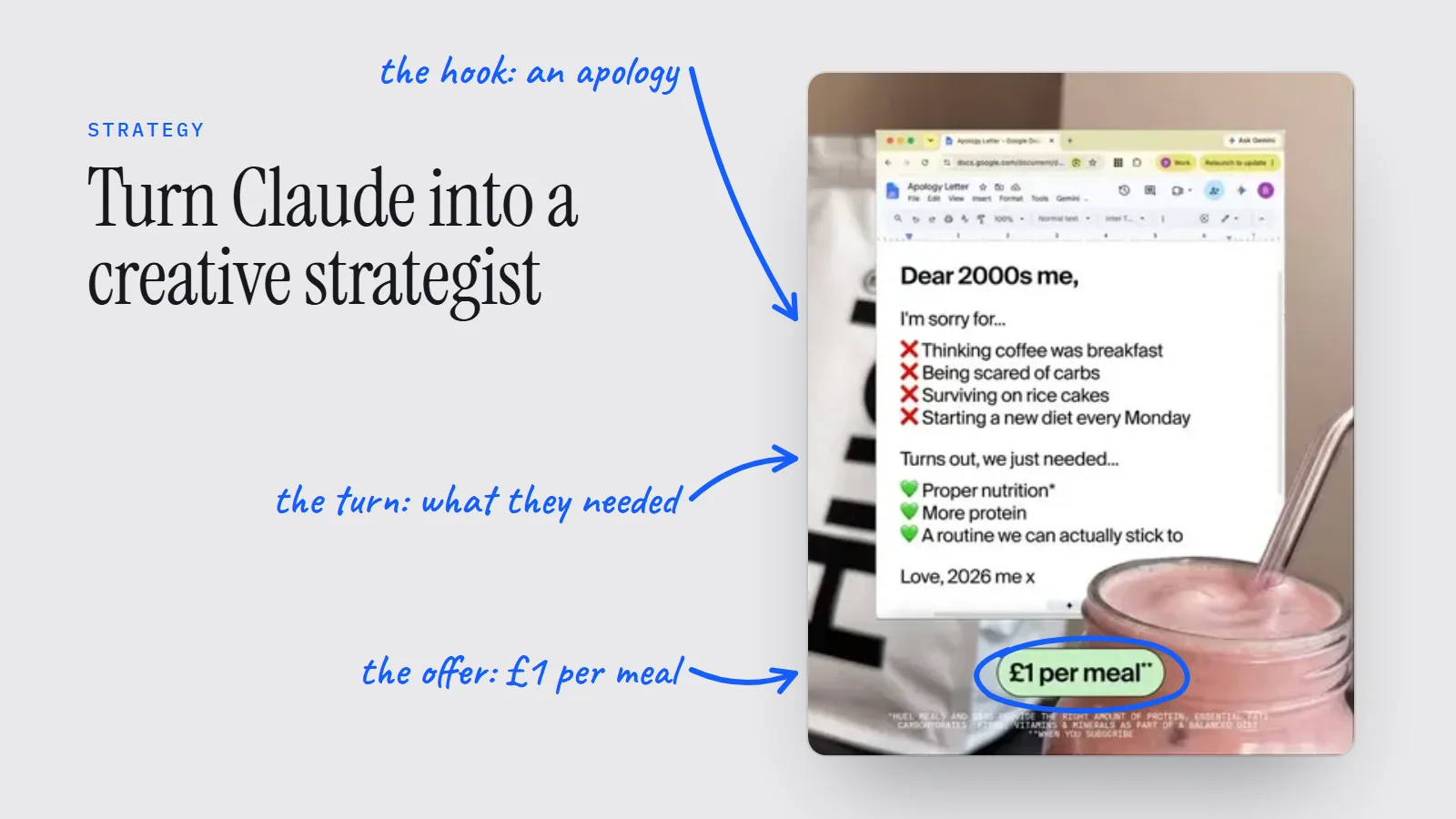
In e-commerce this bridge reliably takes one of two shapes, and choosing between them is mostly a function of price and explanation need. The advertorial argues in article form and suits products that need the most convincing. The listicle delivers the numbered promise the ad made and suits impulse-friendly products. The advertorial, listicle and comparison page builders show each format in full.
What they share is the thing the product page cannot do: they meet the visitor at their actual level of awareness and walk them forward, instead of assuming the walk already happened.
The three cases where the product page is fine
Honesty over dogma, because a landing page is not always the answer:
Everything outside those three cases, which in my experience covers most products that need any explaining at all, higher price points, skeptical niches, health and comfort products, is where the bridge page earns its keep.
The part people skip: judging it on revenue
A landing page that doubles click-through to the shop but sells nothing has not helped you; it has moved the drop-off one screen later. The only honest scoreboard for the product-page-versus-funnel question is revenue per visitor over the whole chain, ad to order. That is the number behind how we measure it.
It is the number I would insist on even if you build every page by hand: clicks are easy to buy and worthless to bank.
If you are starting from zero on this topic, the definitional piece on what an AI funnel builder is covers how the economics of producing these pages changed, which is the reason this question is worth revisiting even if you tested a lander once years ago and shrugged.
FAQ
Should paid ads go to a product page or a landing page?
Cold paid traffic should go to a dedicated landing page. A product page assumes the visitor already wants the product, and a cold click from a social feed carries none of that intent. The landing page builds the problem, explains the mechanism and handles the objections before the shop takes over.
When is it fine to send traffic straight to the product page?
In three cases. Warm traffic such as retargeting, brand search and email clicks has already been persuaded. Impulse products that explain themselves in one image at a low price may not need the extra page. And a brand with only a handful of sessions a day should fix its traffic before it tests pages.
Which landing page format should sit between the ad and the shop?
In e-commerce it is usually an advertorial or a listicle, and the choice depends mostly on price and on how much explaining the product needs. The advertorial argues in article form and suits products that need the most convincing. The listicle delivers the numbered promise the ad made and suits impulse-friendly products.
How do I measure whether the landing page beats the product page?
By revenue per visitor over the whole chain, from the ad to the order. A landing page that doubles click-through to the shop but sells nothing has only moved the drop-off one screen later. Clicks alone do not answer the question.