A Shopify theme page is built to present a product to a visitor who already wants it: gallery, price, variants, buy button. Cold paid traffic does not want it yet. It needs a page that builds the problem, explains the mechanism and answers objections before the shop appears. That page is a funnel step, and a theme does not give you one by default.
I built these pages by hand for e-commerce brands for years before we automated them at Sophistication, and the most common starting point was the same: a good-looking theme, a decent product, and ads that sent every click to the product template. The theme was not the mistake. Using it for a job it was never designed for was.
What is a theme page built to do?
A theme is a shop. Its templates cover the home page, collections, products, the cart and the blog, and its sections let you rearrange them without code. All of it answers one question for the visitor: “I know what this is, how do I get it?”
That is the right design for people who arrive with intent: someone who searched your brand, someone who follows you, someone who was sent a link by a friend. For them, speed to the buy button is a feature. I go through the reasoning in product page vs. landing page.
What does paid cold traffic need instead?
A person who clicked an ad in a feed was interrupted. They are curious at best. Before they care about a price, they need to believe four things in order, and the page has to carry them through it:
- That the problem is real and theirs. The page starts where the ad started, with the promise or the problem, not with the product name.
- That the usual fixes fall short. This is where a mechanism gets explained: why this works when the obvious alternatives did not.
- That your brand is a safe choice. Proof, comparisons and answers to the objections a skeptical buyer would raise.
- That the offer is fair. Only now do price, bundle and buy button appear, and they hand a decided visitor to the shop.
A theme product template does these things in the wrong order, or not at all. It puts the price in the first screen because that is what its visitor came for.

A product page answers "how do I buy". Cold traffic is still asking "why should I care". No amount of theme polish closes that gap.
How is a funnel step different from a theme page?
The difference is not visual. A funnel step has one job and one exit. A theme page has many jobs and many exits.
| Theme page | Funnel step | |
|---|---|---|
| Visitor | Wants the product already | Arrived from an ad, knows little |
| First screen | Gallery, price, buy button | The promise or problem from the ad |
| Navigation | Menu, search, collections, cart | None, or a single link out |
| Goal | Let the visitor browse and buy | Move the visitor to one next step |
| Structure | Sections you arrange | An argument in a fixed order |
| Where it sits | Your store | Between the ad and your store |
None of the right column’s habits belong on your store, and none of the left column’s belong in front of cold traffic. They are two tools.
Can I turn a theme page into a funnel with sections?
Partly, and it is worth knowing where it stops. You can strip the header menu, add a text block, put reviews higher and add a sticky button. That helps, and for a brand with warm traffic it may be enough.
Three things are harder to fake with sections:
Many brands solve this with a separate page builder app or an agency. What matters is not the tool, it is that the page between ad and shop exists and is its own page.
What should I do on Monday?
Do not rebuild the store. Pick your best-selling product and look at where its ad traffic lands today. If it lands on the theme product template, you have the gap.
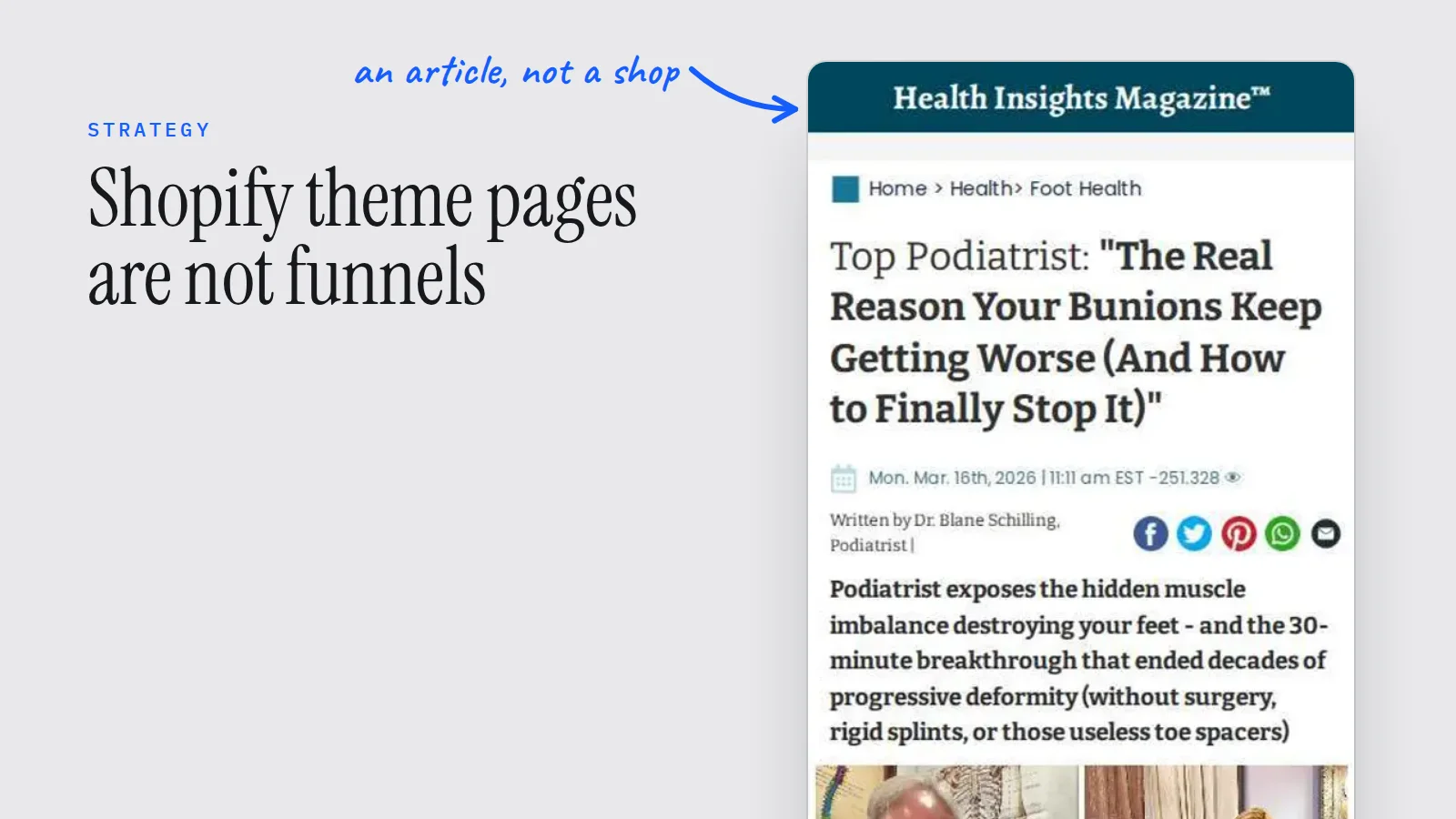
Then add one page in front of it. A listicle is the quickest format to write for a product that is easy to understand. An advertorial fits products that need more explanation. Send a share of the same ad to the new page, keep the rest going to the product page, and compare revenue per visitor over the same days, not clicks.
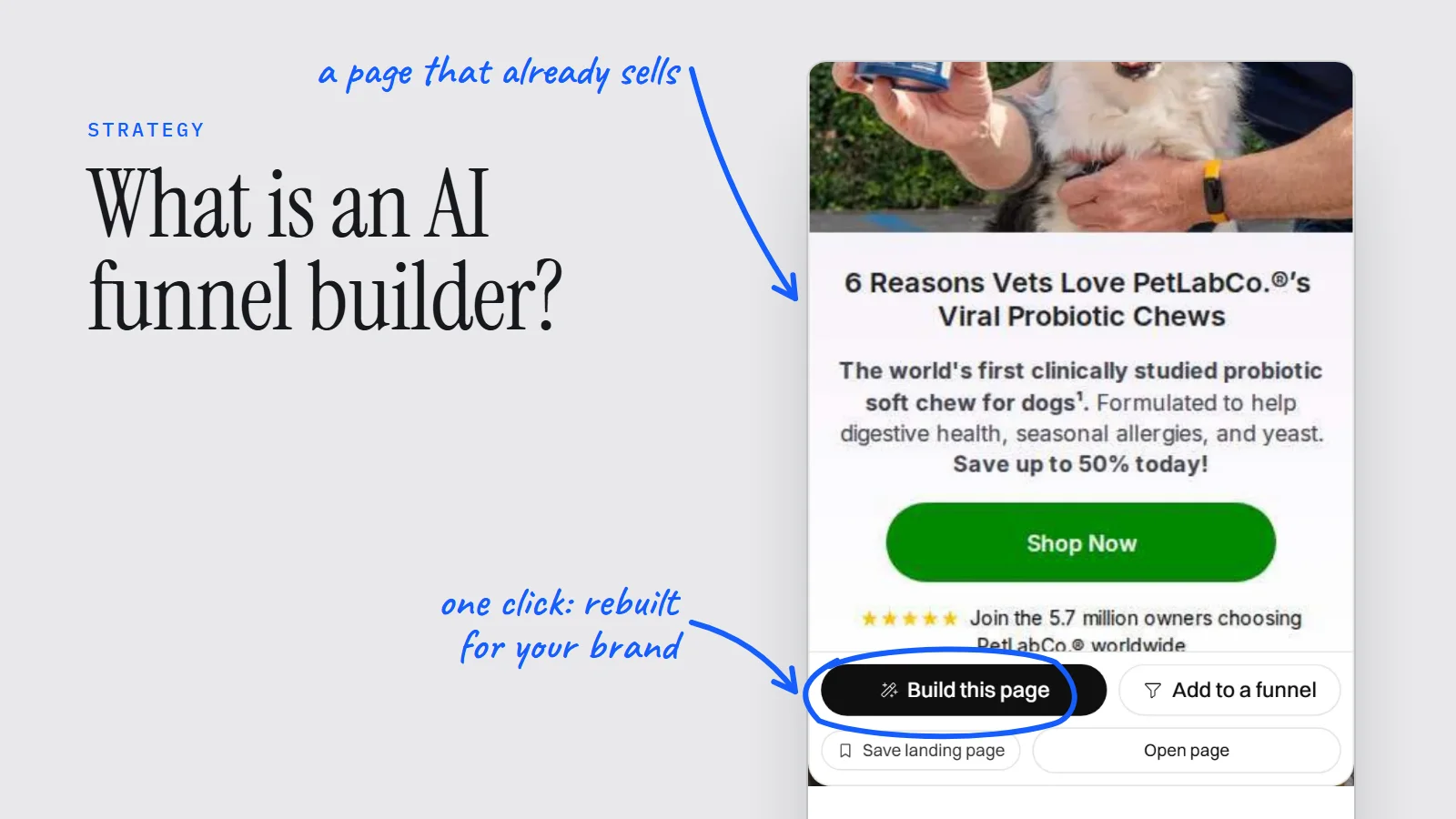
What it means to build such pages with AI is covered in what an AI funnel builder is, and the whole flow from ad to order is on how it works.
When is the theme page fine?
I would not push a funnel step in front of everything. The product page is the right landing page when:
FAQ
Is a Shopify theme page the same as a landing page?
No. A theme page is a template of your store, built for browsing and buying. A landing page is a single page built for one visitor type and one next step. A theme can be bent toward the second job, but it is designed for the first.
Can I use a Shopify theme for a landing page for ads?
Yes, with limits. Hiding the navigation and reordering sections gets you closer. If the traffic is cold, the page still needs an argument in the right order, and that is a writing job, not a layout job.
What kind of page should paid cold traffic land on?
A page that builds the case before it shows the price: usually an advertorial for products that need explanation, or a listicle for products that are easy to grasp. Both send a visitor on to the shop already convinced.
How do I know a funnel page beats my product page?
Split the same ad traffic over both and compare revenue per visitor over the same days. Click-through rate on its own can mislead, because a page can get clicks onward and still lose the sale.
Do I need a separate tool to build funnel pages?
Not necessarily, but the page must exist in some form. You can write it by hand, hire it out or use a funnel builder. Choose the one you will actually update when tests come back.